|
نقاشی
پژواک تنهایی
پدید آورنده: دکتر فاطمه حاجی اربابی
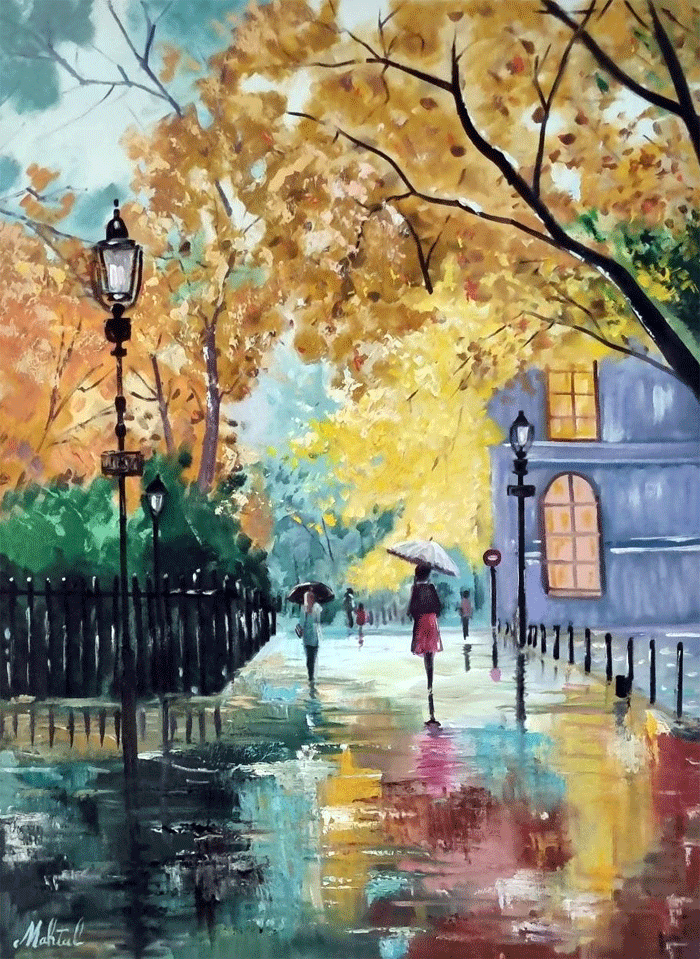
در دل یک روز بارانی پاییزی، تصویری از تنهایی انسان معاصر و امید نهفته در پس پردهی زندگی شهری نقش میبندد. این نقاشی، آینهای است که درون پیچیدهی انسان را در برابر چشمانمان میگشاید.
زنی تنها، با چتری که گویی سپری است در برابر نه تنها باران، بلکه دنیایی که او را احاطه کرده، قدم میزند. چتر او نمادی است از مرزهای روانی که ما برای محافظت از خود میسازیم - حصارهایی نامرئی که گاه ما را از لمس واقعیت زندگی باز میدارند. این زن، تجسم "خود منزوی" در روانشناسی است - بخشی از وجود ما که در مواجهه با آسیبهای عاطفی، خود را از دنیا پنهان میکند.
در تضادی آشکار، مادر و کودکی بیچتر در باران گام برمیدارند. آنها نماد "خود حقیقی" هستند - بخشی از وجودمان که با پذیرش آسیبپذیری، به استقبال تجربههای زندگی میرود. این دوگانگی، یادآور کشمکش درونی ما بین محافظت از خود و رشد از طریق پذیرش چالشهاست.
انعکاس نورها و رنگها در آب، تصویری از ناخودآگاه جمعی یونگ را تداعی میکند - جایی که تجربیات فردی و جمعی در هم میآمیزند و واقعیتی فراتر از ظاهر را شکل میدهند. این لایهی پنهان، منبع خلاقیت، الهام و گاه ترسهای عمیق ماست.
ساختمان آبی با پنجرههای روشن، نمادی از "خانه" در معنای روانشناختی آن است - فضایی امن که در آن میتوانیم به خود حقیقیمان بازگردیم. این تصویر، مفهوم "فردیت" یونگ را به ذهن متبادر میکند - فرآیندی که طی آن، فرد به سمت تمامیت و یکپارچگی شخصیت حرکت میکند.
رنگهای زنده در تقابل با فضای مهآلود، تجلی "دوسوگرایی" در روان انسان است - همزیستی شادی و غم، امید و ناامیدی. این تضاد، یادآور این حقیقت است که زندگی، ترکیبی پیچیده از تجربیات متضاد است و پذیرش این دوگانگی، کلید سلامت روان است.
در نهایت، این نقاشی روایتگر "تنهایی در جمع" است - پدیدهای که روانشناسان اجتماعی آن را ویژگی بارز زندگی شهری مدرن میدانند. با این حال، حضور عناصر طبیعت و گرمای خانهها، نشان میدهد که امکان اتصال مجدد به خود، دیگران و جهان همواره وجود دارد.
این اثر، در عمق خود، دعوتی است به خودشناسی، پذیرش دوگانگیهای درونی و یافتن تعادل میان محافظت از خود و پذیرش آسیبپذیری - مسیری که به سوی رشد، شفقت به خود و ارتباط عمیقتر با دنیای پیرامون میگشاید
Echo of loneliness
On a rainy autumn day, an image of contemporary human loneliness and hope hidden behind the veil of urban life takes shape. This painting is a mirror that reveals the complex inner world of humans before our eyes.
A solitary woman walks with an umbrella that seems to be a shield not only against the rain but also against the world that surrounds her. Her umbrella symbolizes the psychological boundaries we create to protect ourselves - invisible barriers that sometimes prevent us from touching the reality of life. This woman embodies the "isolated self" in psychology - a part of our being that hides from the world when faced with emotional injuries.
In stark contrast, a mother and child walk in the rain without an umbrella. They symbolize the "true self" - the part of our being that embraces life's experiences by accepting vulnerability. This duality is reminiscent of our inner struggle between self-protection and growth through accepting challenges.
The reflection of lights and colors in the water evokes an image of Jung's collective unconscious - where individual and collective experiences blend and form a reality beyond appearance. This hidden layer is the source of our creativity, inspiration, and sometimes deep fears.
The blue building with lit windows symbolizes "home" in its psychological sense - a safe space where we can return to our true selves. This image evokes Jung's concept of "individuation" - a process through which an individual moves towards wholeness and integration of personality.
The vibrant colors in contrast with the misty atmosphere manifest the "ambivalence" in the human psyche - the coexistence of joy and sorrow, hope and despair. This contrast reminds us that life is a complex mixture of contradictory experiences, and accepting this duality is key to mental health.
Ultimately, this painting narrates "loneliness in the crowd" - a phenomenon that social psychologists consider a prominent feature of modern urban life. However, the presence of natural elements and the warmth of homes indicates that the possibility of reconnecting with oneself, others, and the world always exists.
At its core, this work is an invitation to self-knowledge, acceptance of inner dualities, and finding balance between self-protection and embracing vulnerability - a path that leads towards growth, self-compassion, and a deeper connection with the world around us.
|


